
EdinburghScotlandCampus universityFounded 1965
Example Kingsford University
Law, humanities and health sciences in a compact historic city.
The place, its record and what it teaches
Overview
An older institution with particular strength in law, English and the health professions. Teaching is discussion-led, with small tutorial groups and a heavy reading load in the humanities subjects.
- City
- Edinburgh
- Region
- Scotland
- Founded
- 1965
- Type
- Campus university
- Campus
- Self-contained parkland campus
- Students
- 13,600
- International students
- 2,800 from 60 countries
- Placement year
- Not offered
Campus and student life
Buildings are spread through the old town, so the university and the city are hard to separate. Term-time housing is competitive and the winters are dark, but the cultural programme is unusually strong for a city of its size.
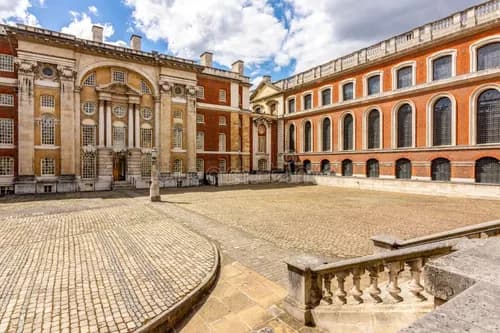
Example imagery. These are stock photographs standing in for campus photography, not pictures of a real institution.
Where you would live
- First-year accommodation
- Guaranteed
- Halls, per week
- £145–£220
Guaranteed for first-year international students; later years are largely private rented.
Support for international students
- Airport meet-and-greet service
- Immigration and CAS support team
- Academic writing centre
- Country-specific student societies
Facilities
- Moot court
- Clinical skills suite
- Historic research library
- Student theatre
What Example Kingsford University teaches
9 courses from the example catalogue across 6 subject areas. Each one opens onto its modules, entry requirements and where it leads.
Health
3 coursesSocial Sciences
1 courseLaw
2 coursesBusiness
1 courseEducation
1 courseHumanities
1 courseHow applying works
Undergraduate applications to Example Kingsford University go through UCAS, the single service every UK university uses. You apply once, to several courses, on one form. Deadlines and the number of choices allowed are set by UCAS and change between cycles — check ucas.com for the current cycle.
- 01
Research and shortlist
Spring–summer before entryDecide what you want to study before you decide where. Shortlist courses on content and entry requirements, then look at the universities that teach them.
- 02
Register and start your application
Early autumnUCAS applications open in the autumn for entry the following year. You register once and apply to several courses through the same form.
- 03
Write your personal statement
AutumnThe single piece of the application you fully control. Expect several drafts — the first one is never the one you send.
- 04
Get your reference
AutumnA teacher, tutor or employer writes about your academic ability and suitability. Ask early and give them time.
- 05
Submit before the deadline
Autumn–winterMedicine, dentistry, veterinary courses and applications to Oxford or Cambridge close earlier than everything else. Check the current dates on UCAS.
- 06
Interviews and admissions tests
WinterOnly some courses require these. If yours does, you will usually be told after you submit rather than before.
- 07
Receive decisions
Winter–springOffers arrive one at a time, not together. Most will be conditional on results you have not sat yet.
- 08
Reply with firm and insurance choices
SpringYou hold two: a first choice, and a backup with lower requirements. Everything else is declined at this point.
- 09
Results day and confirmation
SummerIf you meet your conditions, your place is confirmed. If you narrowly miss, universities sometimes still accept you — wait for the decision before acting.
- 10
Clearing, if you need it
SummerClearing matches students without a place to courses with space. It is a normal route in, not a failure state.
What this university asks for
Entry requirements
Example data- Typical offer
- AAB–BBB at A-level or an equivalent international qualification
- English language
- IELTS 6.5–7.0 depending on the course
Requirements differ by course. Always confirm on the official course page before you rely on them.
What the decision can be
Conditional offer
A place, provided you achieve specified results. Most offers to students who have not yet finished school are conditional.
Unconditional offer
A place regardless of further results, usually because you already hold the qualifications required.
Firm choice
Your first choice. If you meet its conditions, you go there and your insurance choice is released.
Insurance choice
Your backup. It only helps if its requirements are genuinely lower than your firm choice — otherwise it protects nothing.
Unsuccessful
No offer. It is common to receive a mix of offers and rejections; it says less about you than it feels like at the time.
Clearing
A route to a place after results, whether you missed your conditions, changed your mind, or applied late.
If they interview you
Most courses at Example Kingsford University admit on the application alone. If yours is an exception, the Interview resources tab covers what to expect.
Common questions
What is UCAS?
UCAS is the central service through which almost all undergraduate applications to UK universities are made. You complete one application, with one personal statement and one reference, and it is sent to every course you have chosen. Universities then respond individually through the same system.
How many courses can I apply to?
UCAS limits the number of choices in a single application, and applies a lower limit to medicine, dentistry and veterinary courses. The exact numbers are set per cycle — check the current limits on ucas.com before you plan your shortlist.
Does it matter which order I list my choices?
No. Universities cannot see where you have placed them, or which other courses you have applied to. The order is not a ranking, and you only choose a firm and insurance once offers arrive.
Can I apply if I have not finished my qualifications yet?
Yes, and most applicants do. You enter your predicted grades and any results you already hold, and offers are made conditional on you achieving the results specified.
What happens if I miss my conditions?
Do not assume you have lost the place. Universities sometimes confirm applicants who narrowly miss, particularly where the course is not oversubscribed. Wait for the formal decision before entering Clearing.
Is an application fee charged?
UCAS charges a fee that varies with the number of choices, and it changes between cycles. Some applicants are eligible for a waiver. Check the current fee and eligibility on ucas.com.
Tuition and living costs
At Example Kingsford University
Example data- Tuition, per year
- £20,000–£32,000
- Living costs, per month
- £1,150
- Halls, per week
- £145–£220
Where the monthly money goes
- Accommodation
- £480–£950
- Food and household
- £180–£300
- Transport
- £30–£90
- Phone and internet
- £15–£40
- Course materials
- £20–£60
- Social and personal
- £80–£200
Illustrative monthly ranges, shown to demonstrate how a budget breaks down rather than to state what anything costs.
Scholarships
Kingsford International Award
£4,500Competitive award across all undergraduate programmes.
Access to Law Bursary
£3,000For students who would be first in their family to study law.
What it costs from Nepal
The tuition figure is not the number you need. Before it is ever paid there is a test, a visa, a health surcharge, a medical, a set of translations and a ticket — paid in two currencies, at different times, to different people. This is that list, grouped by when the money is actually due.
Before you apply
Spent whether or not you get an offer. This is the money genuinely at risk.
English language test
NPR 28,000–32,000IELTS, PTE or an accepted equivalent. Book early — test centres in Kathmandu fill up months ahead in the peak intake.
Set by: Test provider
Translation and notarisation
NPR 3,000–8,000Academic transcripts, character certificates and citizenship documents translated into English and notarised.
Set by: Notary / translation service
Applying
Paid to make the application itself.
University application fee
£0–25Many UK universities charge nothing to apply directly. UCAS charges a single fee covering all your choices.
Set by: The university, or UCAS
After an offer
Only due once a university has offered you a place and you have accepted it.
Tuition deposit
£2,000–5,000Paid to confirm your place and trigger the CAS. It is not an extra cost — it comes off your first-year tuition — but you need it in cash months before term starts.
Set by: The university
Tuberculosis test
NPR 4,500–6,000Compulsory for Nepali applicants and only valid from a clinic approved by the Home Office. A test taken anywhere else will be rejected.
Set by: Home Office approved clinic
Student visa application
£524Paid to the Home Office when you submit the visa application from outside the UK.
Set by: Home Office
Immigration Health Surcharge
£776 per yearPaid up front for the full length of your visa, not annually. A three-year course is charged as one lump sum, and this is the payment students most often fail to budget for.
Set by: Home Office
Maintenance funds held in your accountStays yours
£Varies by course length and locationNot a fee. You must show the money has been held in a qualifying account for 28 consecutive days before you apply. It stays yours — but it must be there, and it must be evidenced correctly.
Set by: Home Office
Before you fly
The last payments, once the visa is granted.
No Objection Certificate
NPR 2,000–3,000Issued by the Ministry of Education. Required to send tuition abroad through a bank and to clear immigration at Kathmandu.
Set by: Ministry of Education, Nepal
Bank transfer and remittance charges
NPR 1,500–5,000Charged per transfer when tuition is sent abroad, plus the spread the bank takes on the exchange rate.
Set by: Your bank
One-way flight
NPR 55,000–110,000Kathmandu to a UK airport. The September intake is the most expensive week of the year to fly.
Set by: Airline
First month in the UK
£1,200–1,800Deposit and first rent, a phone contract, bedding and food before any loan or part-time work arrives.
Set by: Estimate
No grand total is shown on purpose. It depends on the length of your course, the city you live in and the exchange rate on the day, and a single confident-looking figure would be the most misleading thing on this page. Use the cost calculator to build your own estimate.
Common questions
How much does it cost to study in the UK in total?
Tuition plus living costs, and both vary enormously — by subject, by university and by city. A laboratory-based degree in the south of England can cost several times a classroom-based degree in Wales or the north. Build the number from your own shortlist rather than from an average, and confirm each figure with the university.
When do I have to pay tuition?
Most universities ask for a deposit to confirm your place, with the balance due at or shortly after enrolment. Many allow payment in instalments across the year. The deposit is usually credited against your fees but may be non-refundable, so check the terms before you pay.
Do I need to show all of this money for my visa?
Visa financial requirements are separate from what you will actually spend, and are set by the Home Office rather than the university. The amount, the acceptable evidence and how long funds must be held are all specified in current immigration rules — check gov.uk.
Are there scholarships for international students?
Yes, though full scholarships are rare and highly competitive. Partial awards and fee reductions are far more common, and many are assessed automatically when you receive an offer. Ask the admissions team what you are eligible for — a surprising number go unclaimed.
Can I work to cover my living costs?
Part-time work helps but should not be relied on. Term-time hours are capped by your visa conditions, work is not guaranteed, and the visa application itself requires you to demonstrate funds without counting future earnings.
Documents for the application
Everything Example Kingsford University needs before it can make a decision. Tick these off as you gather them — your progress is saved on this device.
0 of 10 done
Documents for the visa
A separate list, needed later and by a different body. You cannot start it until the university has issued your CAS, and the CAS only arrives once you have accepted an offer and paid any deposit.
0 of 8 done
From Nepal specifically
Tuberculosis test certificate
Compulsory for applicants from Nepal, and only valid from a clinic approved by the Home Office. A test from any other clinic will be rejected outright.
Translated and notarised academic documents
Transcripts, character certificates and citizenship documents, translated into English and notarised.
No Objection Certificate
Issued by the Ministry of Education. Needed to send tuition abroad through a bank and to clear immigration at Kathmandu.
Financial evidence held for 28 days
The money must have been in a qualifying account for 28 consecutive days before you apply, and the statement must show it. Moving the funds in late is the single most common reason a visa is refused.
Does this university interview?
No interview information has been recorded for Example Kingsford University yet. The questions below apply to any UK university interview and to the visa credibility interview, which almost every student from Nepal will sit regardless of the course.
How university interviews work
Why universities interview
An interview tests things an application cannot: whether you can think aloud, respond to a challenge, and hold a conversation about the subject. Most courses do not interview at all — those that do are usually competitive, vocational, or portfolio-based.
They are not trying to catch you out
Interviewers are largely assessing whether you would be good to teach. Being stuck is normal; saying nothing is not. Talk through your reasoning and say when you are unsure.
Know your personal statement
Anything you wrote is fair material. If you claimed to have read something, expect to be asked what you made of it.
Preparing for an online interview
Test your camera, microphone and connection beforehand. Sit somewhere quiet with light in front of you rather than behind. Have water and a copy of your statement nearby, and allow for a delay before you answer.
Group interviews and tasks
Used mostly in healthcare and business. They assess how you work with others, so contributing thoughtfully matters more than dominating or staying silent.
Portfolio interviews
For art, design and architecture. Be ready to explain your process, not just show the outcome — including work that did not go well and what you learned.
Questions to ask them
Have two ready. Ask about how the course is taught, how students are supported, or what previous graduates went on to do. Avoid anything answered on the first page of the website.
Questions and how to answer them
Read what the question is testing before you read the sample answer. Interviewers recognise a memorised answer immediately, and the point of the sample is to show the shape of a good one — not to give you something to recite.
Category
10 questions
Why did you choose this university?
UniversityWhat they're looking for
Evidence you researched this institution specifically, rather than applying to a list someone handed you.
How to answer
Name two or three concrete things — a module, a facility, a placement scheme, a named academic — and connect each to what you want to do. Specific beats enthusiastic.
Sample answer
The course runs a compulsory industry placement in the third year, and the department publishes who students were placed with — several were at firms doing the kind of work I want to move into. The design studios are also open outside teaching hours, which matters because most of my portfolio work happens in long sessions rather than short ones.
An illustration of the shape of a good answer, not a script. Interviewers recognise a memorised answer immediately — use your own examples.
Avoid
Anything that would be equally true of forty other universities: good reputation, beautiful campus, friendly people.
Why did you choose this course?
CourseWhat they're looking for
That you have read the actual course structure, and that your interest predates the application.
How to answer
Point at named modules or the way the course is assessed, then link it to something you have already done — a project, a job, a book, a problem you could not let go of.
Sample answer
I want the second-year data modules in particular. I built a small tool last year to track bus arrival times in my area and got stuck on how to handle missing readings — that is the exact thing the statistics module covers, and I would rather learn it properly than keep guessing.
An illustration of the shape of a good answer, not a script. Interviewers recognise a memorised answer immediately — use your own examples.
Avoid
Describing the career instead of the course. If your answer never mentions what you would study, it is an answer to a different question.
Why do you want to study in the UK rather than at home or elsewhere?
Studying in the UKWhat they're looking for
A comparison you have actually made, and awareness of what a UK degree involves.
How to answer
Give a structural reason — the three-year degree, immediate specialisation, the accreditation your profession requires — and be honest that other places were considered.
Sample answer
I looked at courses at home and in Australia. The UK degree is three years rather than four and specialises from the first term, which suits me because I already know the field I want. The professional accreditation on this course is also recognised by the body I would need to register with later.
An illustration of the shape of a good answer, not a script. Interviewers recognise a memorised answer immediately — use your own examples.
Avoid
Saying the UK is better. It is a comparison, not a verdict, and interviewers hear the difference.
What do you want to do after you graduate?
Career goalsWhat they're looking for
A considered direction. It does not need to be fixed, but it should not be blank.
How to answer
Give a realistic first role and the step after it, and connect it back to the course. Saying you may change direction is fine if you say what would make you change.
Sample answer
I want to start as a junior developer somewhere with structured mentoring rather than at a very small company, then move toward backend and infrastructure work. If the machine learning modules turn out to suit me better than I expect, that would shift things — but I would still start in a development role.
An illustration of the shape of a good answer, not a script. Interviewers recognise a memorised answer immediately — use your own examples.
Avoid
Naming a job title with no path to it, or answering that you have not thought about it.
Why should we offer you a place?
UniversityWhat they're looking for
Self-knowledge and evidence, not confidence. They are asking what you bring that the transcript does not show.
How to answer
Pick one strength, give one piece of evidence for it, and say how it applies to studying here. One well-evidenced claim beats four unevidenced ones.
Sample answer
I finish things. I ran the coding club at my school for two years, including the year we had almost no members, and rebuilt it from four people to about thirty. On a course assessed largely by long projects, that is the habit that matters most.
An illustration of the shape of a good answer, not a script. Interviewers recognise a memorised answer immediately — use your own examples.
Avoid
A list of adjectives. Hardworking, passionate and dedicated are claims every candidate makes and none can prove.
How will you fund your studies?
FinancesWhat they're looking for
That the money is real, understood and documented. In a credibility interview this is the central question, not a side one.
How to answer
State the source, who is providing it, and that you know the total cost including living expenses. Be precise with the figures.
Sample answer
My family is funding it. My father runs a construction supply business and the tuition and first-year living costs are held in a fixed deposit that has been in the account for the last three months. I have the bank statements and the relationship documents ready.
An illustration of the shape of a good answer, not a script. Interviewers recognise a memorised answer immediately — use your own examples.
Avoid
Vagueness about who is paying, or knowing the tuition figure but not the living costs.
What are your plans after your visa ends?
CredibilityWhat they're looking for
That you are a genuine student, which is the entire purpose of a credibility interview.
How to answer
Answer honestly. The Graduate Route is a legitimate part of the system and saying you intend to use it is not a problem — being evasive is.
Sample answer
I intend to apply for the Graduate Route and work in the UK for those two years to get experience in the sector. After that I would like to come back and work in the industry here, where that experience is worth a great deal.
An illustration of the shape of a good answer, not a script. Interviewers recognise a memorised answer immediately — use your own examples.
Avoid
Rehearsed insistence that you will leave immediately. It rarely sounds true, and it is not what is being tested.
What do you know about the modules on this course?
CourseWhat they're looking for
The simplest possible check on whether you read the course page. A surprising number of candidates have not.
How to answer
Name real modules from the year structure and say which you are most and least looking forward to. Naming a hard one honestly reads as genuine.
Sample answer
First year covers programming fundamentals, computer systems and discrete mathematics. I am looking forward to systems most. Discrete mathematics I expect to find hardest — my proof technique is the weakest part of my maths.
An illustration of the shape of a good answer, not a script. Interviewers recognise a memorised answer immediately — use your own examples.
Avoid
Describing the subject in general when you were asked about the course in particular.
Where will you live, and how did you choose it?
CredibilityWhat they're looking for
Practical preparation — a genuine student has looked into arriving, not just into applying.
How to answer
Say what you have arranged or applied for, roughly what it costs, and how you get from there to campus.
Sample answer
I have applied for university halls, which are guaranteed for first-year international students who apply before the deadline. They are between £125 and £195 a week depending on the room, and about fifteen minutes' walk from the main building.
An illustration of the shape of a good answer, not a script. Interviewers recognise a memorised answer immediately — use your own examples.
Avoid
Not knowing. It is an easy question to prepare and a conspicuous one to fail.
Which part of this subject do you find hardest?
CourseWhat they're looking for
Honesty and self-awareness. A candidate who finds nothing difficult has usually not gone deep enough to meet the difficulty.
How to answer
Name something real, then say what you are doing about it. The recovery matters more than the weakness.
Sample answer
Writing about my own work. I can build something and explain it out loud, but the written evaluation is always the part I leave until last. I have started writing a short note at the end of each project while it is still fresh, which has helped.
An illustration of the shape of a good answer, not a script. Interviewers recognise a memorised answer immediately — use your own examples.
Avoid
A strength wearing a disguise. Being a perfectionist is not an answer to this question.
Practise with feedback
Ignition’s practice tool puts subject questions in front of you one at a time and shows what an interviewer is assessing once you have written an answer.